

The Storytellers Keeping Dublin Gothic Spirit Alive

Last updated Oct 09, 2026
Who better to guide us through Dublin’s darker side than someone who spends his days immersed in it? Tom Lawlor, Co-Director of Dublin City Council Bram Stoker Festival, takes us beyond Dracula to meet the storytellers, performers, collectors and creators keeping the city’s fascination with folklore, horror and the supernatural very much alive.
Whenever I ask visitors what they like most about Dublin, the answer is nearly always the same: the people. Not the buildings, the pubs, the parks, the many tourist attractions or even the Guinness. The people.
I think the same is true of what makes Dublin and Ireland such a popular place for Hallowe’en, which is rooted in the ancient Irish tradition of Samhain. Our respect for the supernatural is ancient, and keeping those traditions alive comes down to the people - writers, performers and storytellers - who could spot something strange or sinister in this realm and follow it further into the shadows.
Bram Stoker was an Irish man raised in a Dublin rife with occultism and Victorian era spiritualism. His early interest in the dark side came from close to home: sick for much of his early childhood, he spent long periods in bed listening to stories told by his mother, Charlotte, who lived through the cholera epidemic in Sligo in 1832 and told him about mass graves, hiding from sickness and people’s very real fear of being buried alive. It’s easy to hear echoes of those stories in the work he went on to write.
At Dublin City Council Bram Stoker Festival, we’re keeping his interests alive by presenting events by artists, writers, historians, podcasters, academics, musicians and creators putting a contemporary spin on ancient ideas. The festival began in 2012, the centenary of Stoker’s death, but it has never been about simply putting a cape on someone and calling it Dracula. We celebrate Stoker, of course, but we also celebrate the Dublin that shaped him and the artists finding new ways to explore horror, folklore, the supernatural and the macabre.
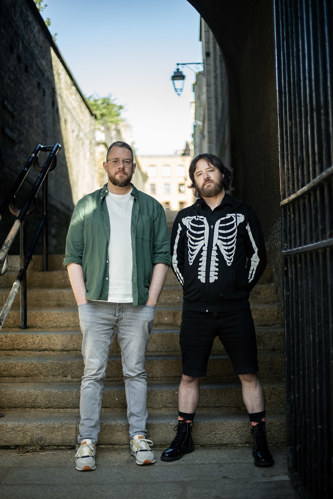
Peter Dunne and Liam Geraghty, the creators of the Irish horror podcast Petrified are two Dubliners who live and breathe horror. Peter’s horror obsession began during afternoons spent watching Hammer films with his grandfather. As an adult, he has researched fears and phobias and how we develop our fears as children; last year, he was supported by the Arts Council of Ireland to study how children interact with horror, finding that experiencing horror not only builds community but is a healthy way for us to process our own traumas. Moreover, he understands that horror is great craic, which is in part why his audio-drama horror podcast Petrified is Ireland’s most successful horror podcast. Peter writes and directs, while Liam produces, edits and creates the unnerving sound world around each story. On Friday 23rd October, they’ll bring Petrified to Project Arts Centre for a brand-new live episode about ordinary people having very, very unpleasant encounters with the supernatural.
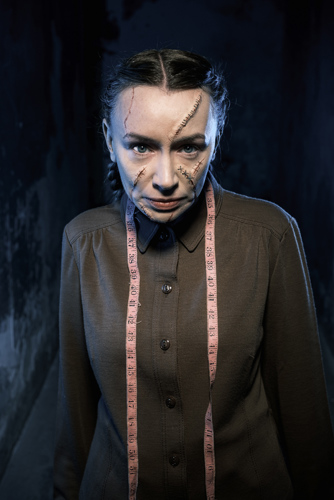
Over at Smock Alley Theatre, Cork writer and performer Irene Kelleher brings her play Stitch to Dublin. As a child, she begged her mother for a Ladybird edition of Frankenstein - early signs of a mind attracted to the otherworld. Her play Mary and Me was inspired by the lonely death of a pregnant teenager in 1980s Ireland, while Gone Full Havisham took one of Dickens’s best-known women and gave her a sharp, funny and furious new life. Stitch goes somewhere even darker. It’s a homage to Frankenstein, set against the shame and secrecy of 1980s Ireland, and asks what happens when the line between monster and maker starts to disappear. It runs from 23rd - 26th October in Smock Alley’s atmospheric Boy’s School. It’s intimate, unsettling and strictly for adults.
One of my favourite Dubliners, Paul Mangan, has spent years collecting things that some people might cross the street to avoid. Paul (also known as bizarre cabaret performer Monsieur Pompier) blames his fascination with the curious and strange on his mother for taking him to the Dead Zoo and his father for showing him horror films when he was almost certainly too young.
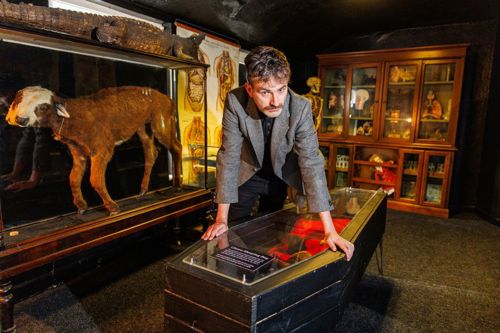
His collection grew into the Museum of Curiosities on Lower Pembroke Street. It’s full of strange taxidermy, antique medical objects, cursed dolls, Victorian… pleasure toys and even a piece of centuries-old cake. During the festival, Paul and his collaborators will transform the museum’s five rooms for Senses, an experience built around sight, sound, touch, scent and taste. There’ll be Victorian viewing devices, a theremin, mysterious objects, unusual perfumes and edible curiosities. It could only have come from one person’s very particular obsession.
Another group of artists keeping old stories alive will collaborate at SCANRA. For SCANRA: The Bonfire, they’ll take over the room upstairs at Bewley’s on Grafton Street for a night of music, myth and storytelling.
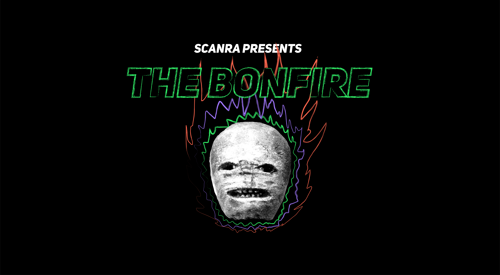
Musician and performance artist Branwen Kavanagh makes surreal work that brings together folklore, poetry, theatre and puppetry. Harpist and composer Alannah Thornburgh draws on fairy lore, old Irish music and stories gathered from historians, storytellers and rural communities. They’ll be joined by storyteller Sarah McKenna Dunne, whose work delves into folklore, mythology and lives often left out of history, with Dublin writer and musician Róisín Nic Ghearailt hosting. What I love about SCANRA is its simplicity - people gathering in the dark to listen to music and tell stories. That’s what Samhain has always been in Ireland - an understanding that you need community when the veil between our world and the darker world is at its thinnest.
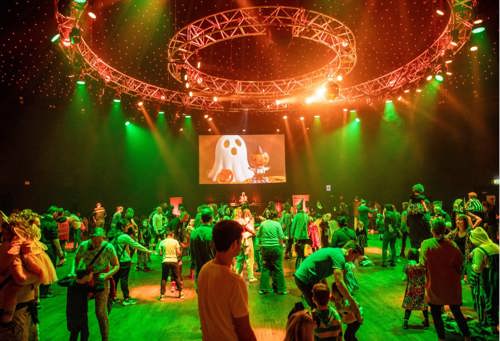
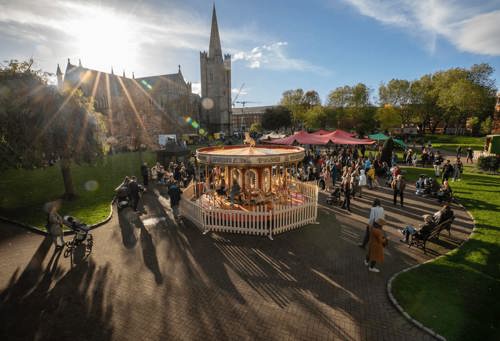
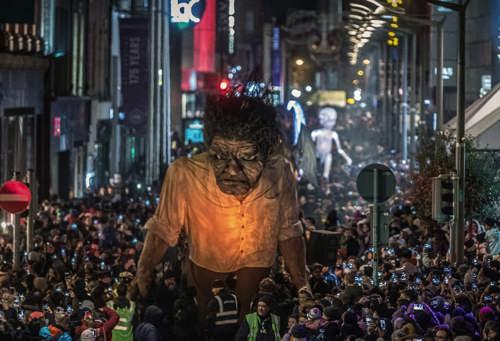
Dublin’s darker side isn’t just for adults and children understand the appeal of all this instinctively - they love weird stories, dressing up and just enough fear to make things exciting. Stokerland turns St Patrick’s Park into a free Gothic playground for children under 12, with performances, strange characters, workshops, face-painting, creative play and a free Victorian style carousel. Dracula’s Disco invites children aged five and over to throw shapes in the Round Room at the Mansion House while Dracula’s own DJ (who’s way more fun than you’d think) spins, while Macnas will close the festival on Monday evening with Fiáin (the Irish word for wild). This free, all-ages spectacular parade will take over the streets of the north east inner city, celebrating 40 years of Macnas and the wild imagination behind its world-renowned work.
Dublin is compact enough that following these people and their stories is also a great way to explore the city. Staycity is an Irish company, born here in Dublin, and its seven central locations will keep you close to the festival’s events.
Dublin Castle, Christchurch, Augustine and Tivoli are all handy for Smock Alley and Stokerland. Mark Street and City Quay are well placed for Trinity College, Merrion Square, the National Library and the Museum of Curiosities. Staycity’s City Centre location on Little Mary Street is a good starting point for exploring the northside and catching the Macnas spectacle.
Whatever Staycity location you choose, you’ll find that Dublin’s Gothic spirit isn’t trapped in the Victorian era. It’s still alive in work by artists who love horror, collectors who can’t pass an odd object without taking it home, musicians listening out for old stories and children arriving in St Patrick’s Park dressed as bats.
Stoker and his Victorian contemporaries knew that the everyday world becomes way more exciting when you look beyond what you can actually see. At the festival, we hope we’re giving today’s curious wanderers and shadow embracers something to sink their fangs into after dark.

Locations Close By


